


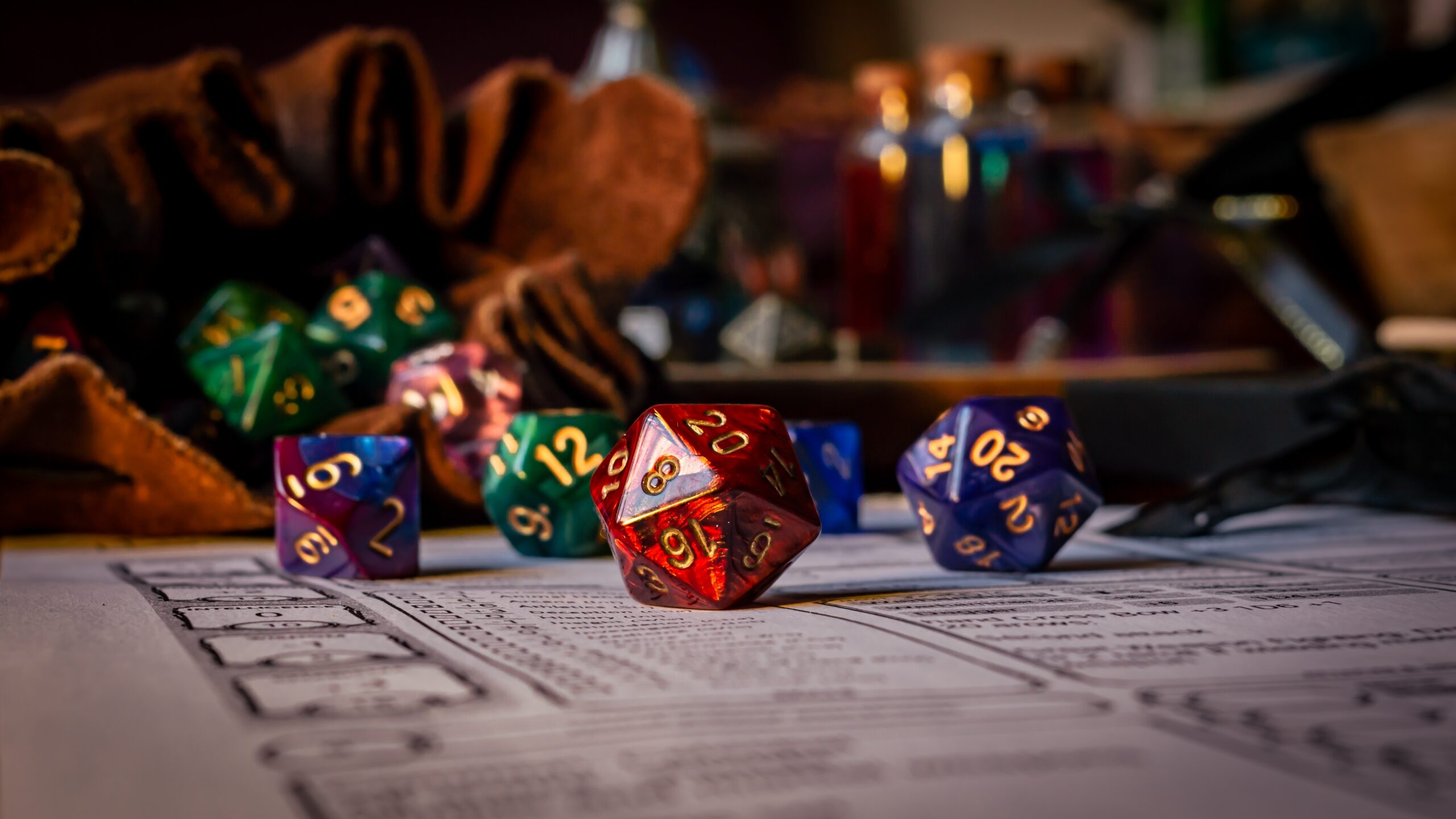
Welcome to the enchanting realm of Dungeons & Dragons (D&D), where every roll of the dice has the power to shape epic stories. At Bomran, we know just how much these iconic tools mean to players. Whether you’re a first-timer nervously rolling your first d20 or a seasoned adventurer with a bag full of lucky DnD dice, we’re here to ensure you’re fully equipped for every campaign. Based in the UK, we specialise in high-quality D&D dice and accessories, helping players bring their creative visions to life.
This guide is all about the heart of any D&D session – the dice! These aren’t just game mechanics, they’re storytellers, deciding the fate of your characters and the worlds they inhabit. In this post, we’ll explain what D&D dice are, explore the unique role of each type, and provide practical tips on how to use them effectively. So, grab your favourite set and let’s dive in!
What are DnD dice?
If you’ve ever seen a D&D game in action, you might have wondered why players roll so many strange-looking dice. DnD dice sets are unlike the typical six-sided dice you’ll find in Monopoly or other traditional board games. Instead, they are a collection of polyhedral dice, geometric shapes with varying numbers of sides that bring an extra level of randomness and excitement to the game.
A standard set of DnD dice includes seven dice:
- d4 (four-sided die): The smallest in the set, shaped like a pyramid.
- d6 (six-sided die): The most recognisable die, also used in many board games.
- d8 (eight-sided die): A midsized die often used for weapon damage.
- d10 (ten-sided die): A versatile die used for damage and percentile rolls.
- d% (percentile die): Another d10, but marked with tens digits (10, 20, 30, etc.).
- d12 (twelve-sided die): A die reserved for heavy damage rolls or special mechanics.
- d20 (twenty-sided die): The iconic star of D&D, used for the majority of gameplay rolls.
Together, these dice create a wide range of possible outcomes, from simple attack damage to complex calculations like spell effects or success in tricky situations. They also inject an element of unpredictability into the game, making each session a unique adventure.
Why do DnD dice matter?
D&D dice add the thrill of chance to your decisions. When you roll, you’re leaving the outcome up to fate, which makes victories sweeter and failures more memorable. Dice also help to balance gameplay, ensuring no one has complete control. After all, even the strongest warrior can fumble an attack, and even the most inexperienced wizard can get lucky and land a critical hit!
With so much riding on these rolls, having a reliable, well-made set of dice is essential. That’s where Bomran comes in, offering premium dice sets that look stunning and roll like a dream.
What Each Die Means & How to Use Them
D&D dice might look intimidating at first, but they’re surprisingly easy to use once you understand their roles. Every die has a distinct function, adding complexity, unpredictability and excitement to your campaigns. Whether you’re rolling to hit a ferocious dragon or trying to charm your way out of trouble with a suspicious guard, the dice decide your fate. Let’s break them down one by one.
The d20: The Star of the Show
The d20 is the most iconic die in the game, and it takes centre stage in almost every D&D session. Its 20 sides provide a wide range of outcomes, and it’s the die you’ll roll the most frequently, making it the backbone of gameplay.
When It’s Used:
- Attack Rolls: Determine if your weapon hits an enemy based on your roll plus modifiers compared to the target’s armour class.
- Skill Checks: Use the d20 to attempt a variety of tasks, such as stealthily sneaking, decoding ancient runes, or climbing a sheer cliff.
- Saving Throws: Roll to resist harmful effects like poison, traps, or fireball spells.
The d20 is particularly exhilarating because of the possibility of rolling a natural 20 (critical success) or a natural 1 (critical failure). Rolling a 20 often results in spectacular success, such as landing a devastating blow or performing an impossible feat. On the other hand, a roll of 1 can lead to failure and often results in hilariously disastrous consequences, perfect for adding drama to your story.
Top Tip: Invest in a set of multiple d20s, as they are the most frequently used dice. Many players keep a lucky d20 or a themed set that matches their character’s personality (such as fiery red dice for a Dragonborn or ethereal blue for a sorcerer).
The d12: The Mighty Powerhouse
The d12 might not appear in every session, but it shines when high damage and sheer power are involved. With its 12 sides, this die often takes on a supporting role, but when rolled, it packs a serious punch.
When It’s Used:
- High-Damage Weapons: Heavy-hitting weapons like great axes use the d12 to determine damage. When a barbarian unleashes their rage, the d12 can devastate opponents with its high potential rolls.
- Special Mechanics: Dungeon Masters (DMs) might call on the d12 for custom rolls, like determining the outcome of chaotic events or environmental hazards.
Though it’s not as commonly rolled as the d20, the d12’s presence adds a sense of anticipation. The results are often pivotal in high-stakes combat, making this die a favourite for fighters and barbarians.
Top Tip: If you’re playing a class that relies on the d12, such as a barbarian, consider pairing it with other dice that complement your damage output for maximum impact.
The d10: The Versatile Workhorse
The d10 is one of the most versatile dice in D&D. It serves two important purposes: rolling for regular damage and as part of the percentile dice system (paired with the d% to generate numbers between 1 and 100).
When It’s Used:
- Weapon Damage: Many martial weapons, such as halberds and heavy crossbows, use the d10 for their damage rolls, making it indispensable for certain combat-focused characters.
- Spell Damage: Potent spells like Fireball or Disintegrate often rely on d10s to determine how much havoc they wreak on your foes.
- Percentile Rolls: When paired with the d%, the d10 creates percentile rolls used for random tables. These rolls might determine what treasure you discover, the outcome of an encounter, or other unpredictable game elements.
For spellcasters and dungeon masters alike, the d10 is a reliable tool in building suspense or determining the outcome of big moments in the game.
Top Tip: Master the art of using percentile dice by understanding their role in game mechanics. They’re particularly useful for DMs creating immersive and unpredictable worlds.
The d8: The Balanced Contender
The d8 strikes a balance between versatility and utility, often appearing in both combat and support roles. It’s a dependable die with a moderate range of results, making it a staple for adventurers of all classes.
When It’s Used:
- Weapon Damage: Common weapons like longswords, short bows, and war hammers rely on the d8 for damage rolls, making it an essential die for fighters, paladins, and rangers.
- Healing Spells: Clerics and other spellcasters often roll d8s for their restorative spells, such as Cure Wounds or Healing Word, to bring allies back from the brink of death.
Its balanced nature makes the d8 a workhorse in both combat and healing, ensuring that characters can deal damage and recover effectively.
Top Tip: If you’re a supporting character, keep your d8s at the ready. Healers will find themselves rolling them frequently, and having multiple on hand can speed up gameplay.
The d6: The Classic Cube
The d6 is perhaps the most recognisable die, with its six faces and universal appeal. While often associated with board games, the d6 is a key player in D&D due to its versatility.
When It’s Used:
- Sneak Attack: Rogues deal extra damage with their sneak attack ability, often requiring them to roll multiple d6s at higher levels. This makes the d6 a rogue’s best friend.
- Spell Damage: Lower-level spells, like Magic Missile and Burning Hands, frequently call for d6 rolls to determine their effects.
- Ability Scores: Some DMs use d6s for rolling character stats during creation, offering a randomised way to generate strength, dexterity, and other key attributes.
The d6’s small size belies its importance, as it can stack quickly for massive damage in the right hands.
Top Tip: Keep a large pool of d6s on hand if you play a rogue or cast spells that require multiple dice rolls. Bulk sets of d6s are widely available and worth investing in for high-level gameplay.
The d4: The Little Triangle That Packs a Punch
The d4 is the smallest die in the set, shaped like a pyramid, but don’t let its size fool you. This little die often proves critical in both combat and support roles.
When It’s Used:
- Spells: Many support spells, like Bless and Magic Missile, use the d4 for their effects.
- Healing Potions: Basic healing potions typically rely on d4 rolls to restore hit points.
Rolling a d4 is always an interesting experience because of its unique shape—it doesn’t roll so much as land decisively. Its smaller range of results also makes it ideal for lower-damage spells and abilities.
Top Tip: Be mindful of where you leave your d4s; their sharp edges can be painful if stepped on (a rite of passage for any D&D player). Dice trays are a great way to keep them contained during gameplay.
The Percentile Dice (d100)
The percentile dice, made up of the d10 and d%, are a unique pair used for generating random outcomes between 1 and 100. These rolls often add unpredictability and excitement to your campaign.
When It’s Used:
- Loot Tables: Use percentile rolls to determine what treasures your party uncovers, from mundane items to legendary artefacts.
- Random Events: From rolling weather patterns to triggering chaotic encounters, the d100 introduces delightful uncertainty to the story.
- Special Mechanics: Certain spells or effects, like Wild Magic Surges, rely on percentile rolls for their diverse outcomes.
The percentile dice can feel intimidating at first, but they’re an excellent tool for creating memorable moments in gameplay.
Top Tip: If you’re a DM, consider using percentile rolls sparingly but effectively to maintain their novelty and impact.
By mastering the use of each die, you’ll become a confident and capable D&D player, ready to face any challenge that comes your way. Whether you’re rolling to attack, heal, or uncover treasure, your dice are your gateway to adventure.
Roll for Adventure!
Dice are the beating heart of Dungeons & Dragons, transforming your choices into thrilling moments of triumph and laughter. Each roll is a chance to shape your destiny, whether it’s landing that critical hit against a fearsome dragon or surviving a nail-biting saving throw. Every game session is a unique story waiting to be told, and your dice are the keys to unlocking those epic tales. With each roll, you set the stage for adventure, turning the mundane into the extraordinary.
Ready to elevate your game? At Bomran, we’ve got the perfect DnD dice sets to match your style. From vibrant, custom sets to classic favourites, our collection is designed to enhance your gameplay experience. Browse through our selection today, and roll into your next adventure with confidence!
FAQs
How many dice do I need to play D&D?
A standard 7-die set is enough for most games, but having extras is always a good idea.
What’s the most important die?
The d20 is the most frequently used die and the heart of D&D gameplay.
What happens if I roll a natural 20?
A natural 20 often means a critical success, leading to bonus damage or amazing results.
Can I customise my DnD dice?
Yes! Bomran offers custom dice options for players who want something unique.
What’s the difference between d10 and d%?
The d10 rolls numbers 1–10, while the d% is used for generating percentages.
Visit Bomran’s D&D Shop UK now and discover the perfect DnD dice for your next campaign. Your next epic adventure awaits!

